The Guerrilla Gardener's Guide to Greening Neglected City Spaces
Urban Gardening | September 28, 2026

There's a stretch of sidewalk near my apartment where four tree pits sit empty, filled with compacted dirt, cigarette butts, and the occasional crushed can. Every spring I walk past them and think about how much better the block would look with marigolds and native grasses spilling over the concrete edges. A few years ago, I stopped thinking about it and started planting. That first season taught me more about urban gardening than any book — and about the tricky intersection of good intentions, city bureaucracy, and the question of who actually owns a patch of dirt.
Guerrilla gardening has a romantic reputation, and there's a long history of activists planting food and flowers on neglected land as a form of quiet protest. But if your goal is to make your neighborhood greener over the long term, a little diplomacy goes a lot further than a midnight seed-bombing run. The plants need to survive, after all, and that means the people who control the land — whether that's a city agency, a landlord, or a business owner — need to be on your side, or at least not actively against you.
Start With the Easiest Wins
Tree pits and sidewalk planters are the most accessible targets. In many cities, residents are allowed or even encouraged to plant in the pits around street trees, as long as they don't damage the tree itself. Rules vary wildly, so a quick call to your city's parks department or a look at the municipal website will tell you what's permitted. The safest approach is to plant shallow-rooted, drought-tolerant species that won't compete with the street tree for water. Sedums, creeping thyme, and native wildflowers like black-eyed Susan work well and can survive on rain alone once established.
Abandoned lots are a bigger project. Before you plant a single seed, find out who owns the parcel — county property records are usually searchable online. If it's city-owned, there may be an official adopt-a-lot program that gives you permission and sometimes even supplies. If it's privately owned, a polite letter to the owner explaining your plans can occasionally yield a surprising yes, especially if you offer to keep the lot mowed and trash-free. Never assume that empty means unclaimed.
Plant for the Neighborhood, Not Just for Yourself
One of the fastest ways to lose goodwill is to plant something that looks like a mess or blocks a sightline. Choose plants that are tidy, low-maintenance, and ideally native to your region. Pollinator-friendly flowers are a great choice because they benefit everyone and give you a ready answer when someone asks what you're doing. If you're planting edibles, be aware that soil in old urban lots can contain lead and other contaminants, so use raised beds with clean soil or stick to ornamental and non-edible plants unless you've had the soil tested.
Watering is the hardest part of guerrilla gardening. Newly planted seedlings need consistent moisture for the first few weeks, and hauling jugs from your apartment gets old fast. Plant in the fall or early spring when rain is more reliable, mulch heavily to retain moisture, and choose drought-tolerant species so that once they're established, they can fend for themselves.
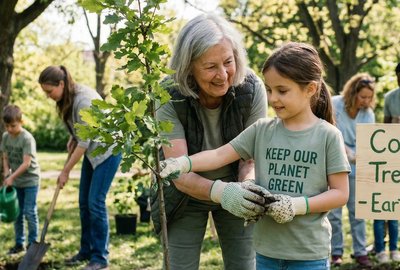
The most rewarding part of tending these forgotten spaces isn't the flowers themselves — it's watching neighbors stop to look, then to weed, then to bring their own seedlings. A neglected corner becomes a gathering point. That's the real harvest.
-

-

-
From Scrap to Soil: Regrowing Vegetables on Your Kitchen Counter
Aug 31, 2026Sustainable City Living

-

-
Seed Swaps and Tool Libraries: The Sharing Economy of City Gardening
Sep 22, 2026Sustainable Living

-

-

-
The Guerrilla Gardener's Guide to Greening Neglected City Spaces
Oct 1, 2026Sustainable City Living

-
Rain Barrels, Drip Lines, and Other Ways to Waste Less Water in Your Garden
Sep 25, 2026Small Space Gardening

Neon Meadow
Cutting your garden's water use doesn't mean sacrificing your plants — it means being smarter about when, where, and how you water.